
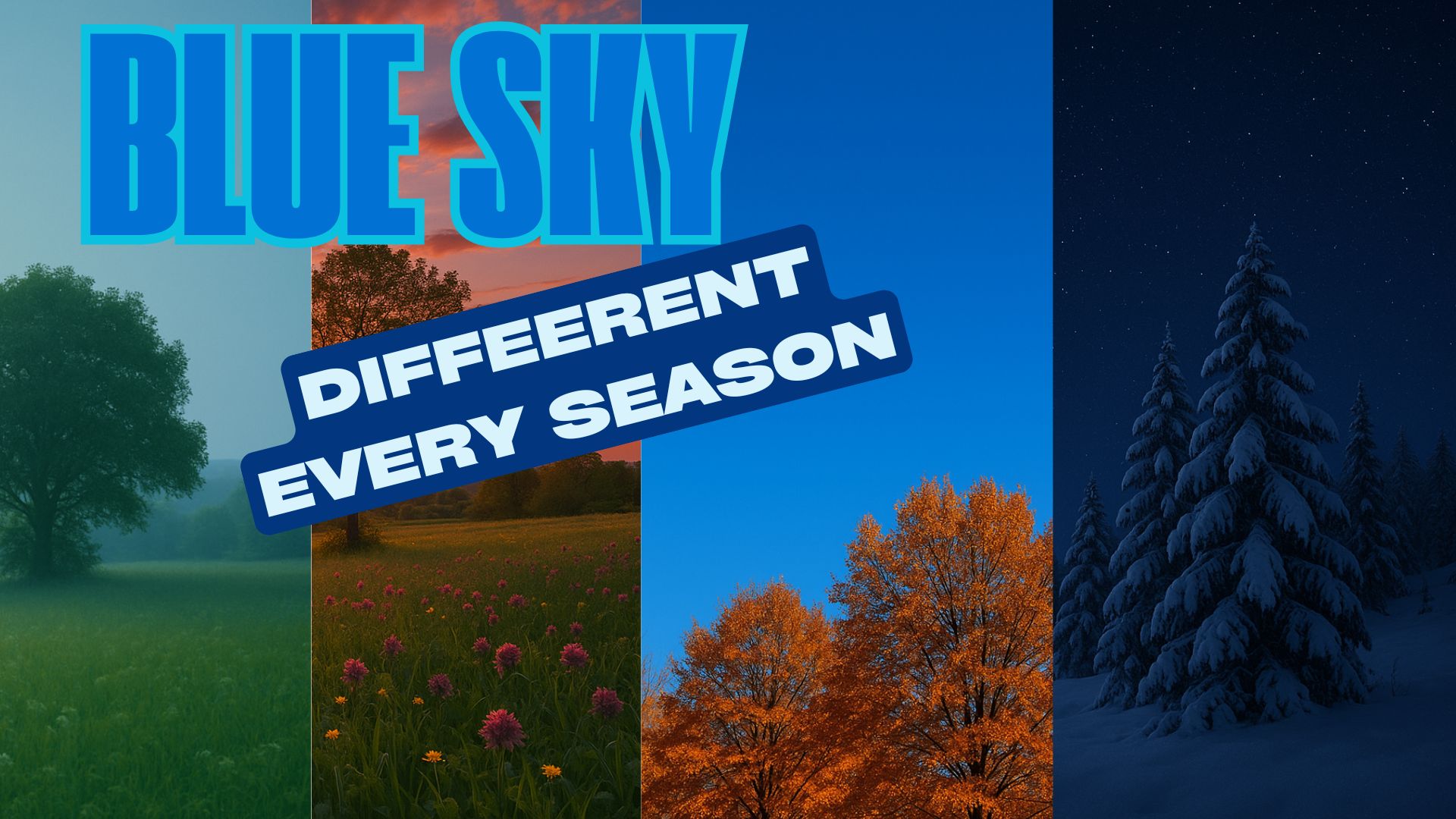
Why the Sky Changes with the Seasons: The Science and Beauty of Our Ever-Shifting Atmosphere
The sky is more than just a backdrop to our lives—it’s a dynamic, seasonal tapestry woven with color, clarity, and wonder. As the Earth spins and orbits the sun, the way we experience the sky changes too. Have you ever noticed how October skies appear bluer, or how summer sunsets shimmer in waves of heat? These differences aren’t just poetic observations—they’re rooted in physics, atmospheric science, and human perception. Let’s explore why the sky looks so different in each season and what these changes can teach us about our world.
Why the Sky is Blue in the First Place
Before we can understand the seasonal shifts, it helps to grasp why the sky is blue at all. Sunlight, while appearing white, contains all visible wavelengths. When this light enters Earth’s atmosphere, it collides with tiny particles—mainly nitrogen and oxygen molecules—that are smaller than the wavelength of light. These particles scatter shorter wavelengths like blue and violet much more efficiently than reds and oranges.
But why don’t we see a violet sky? Our eyes are more sensitive to blue light, and much of the violet light is absorbed by the upper atmosphere. This results in a predominantly blue sky for the human eye—until other environmental or atmospheric factors come into play.
Autumn: Cobalt Clarity
Autumn skies often feel especially vivid and deep. That’s not your imagination. The crisp blue of fall skies results from cooler, drier air. Cold air holds less moisture than warm air, so there are fewer water droplets in the atmosphere to scatter the light in a hazy way. This leads to a more saturated, cobalt blue appearance.
Artists from the Hudson River School, such as Thomas Cole and Frederick Church, often captured this clarity in their landscapes, recognizing that October light brings out heightened contrast and sharper views. With fewer pollutants and minimal haze, the fall sky becomes a brilliant canvas for colorful foliage and clear constellations.
Winter: Crystal-Clear Views and Stellar Nights
Winter skies, though colder, offer perhaps the clearest views of all. Cold air is denser and drier, meaning there’s even less moisture to blur the view. This clarity makes winter one of the best times for stargazing. Astronomers often take advantage of this “perfect window” of visibility, either during this season or by placing telescopes in high, dry, or even orbital locations.
This is also the best time to observe auroras, or northern lights. These atmospheric light shows are caused by solar flares interacting with the Earth’s magnetic field. In warmer seasons, high humidity and moisture scatter and dull these displays. But in the dry, dark skies of winter, auroras appear in full, vivid color.
Even ancient cultures recognized winter’s celestial gifts. The “winter hexagon”—a giant star pattern surrounding Orion—marks the cold season in the northern hemisphere. The clarity and stillness of winter skies have long inspired rituals involving candles and lights, perhaps because the stars themselves seem to shine brighter during this season of reflection.
Spring: Shifting Hues and Restless Skies
As winter yields to spring, the atmosphere starts to warm, and the air becomes more turbulent. With cold and warm fronts colliding and more moisture entering the mix, the sky loses some of its crispness. Instead of cobalt, we see silvery blues and pastel sunsets painted in pinks, violets, and gold.
Emily Dickinson once described a “certain slant of light”—a fitting metaphor for spring’s elusive sky. It’s no longer crystal clear, but it carries its own delicate beauty. While stars don’t sparkle as sharply as they do in winter, sunsets become richer, and the overall mood of the sky softens, reflecting nature’s renewal.
Summer: Haze, Heat, and Celestial Veils
Summer skies often feel heavier, hazier, and less defined. That’s because warm air holds more water vapor. With higher humidity levels, plus the addition of pollen, dust, wildfire smoke, and even ozone, the sky takes on a milky, pale appearance. The blues are less vibrant, the horizon more blurred.
Heat also causes light to shimmer, especially above hot surfaces like asphalt or car roofs. This optical distortion affects both human vision and birdwatchers’ binoculars alike. Still, there’s a beauty in the haziness of summer—a dreamy, filtered effect like nature’s own Instagram filter.
Interestingly, during summer, Earth’s position relative to the sun gives us a better view of the crowded center of the Milky Way. So even though individual stars might be harder to see, we gain access to a stunning river of starlight that reminds us of our place in the galaxy.
Applying These Lessons to Daily Life
What does all this seasonal sky talk mean for us today?
- Observation encourages mindfulness. Slowing down to watch the sky helps us stay grounded in the present.
- Seasonal patterns reveal natural rhythms. Just as our ancestors used stars to plant crops or predict floods, we can reconnect with the world by watching the skies.
- Beauty is everywhere. From the rich blues of fall to the golden veils of summer, each season offers a distinct form of visual poetry.
Why not keep a sky journal? Note the colors, clarity, temperature, and stars you see each evening. Use apps like Stellarium to identify constellations. Or try your hand at watercolor painting the night sky. These small practices cultivate appreciation and connection.
Conclusion: The Sky Is a Living Canvas
The sky isn’t static. It’s a living, breathing canvas that changes with the seasons—reflecting shifts in weather, temperature, moisture, and even our position in the galaxy. Whether it’s the deep cobalt of autumn, the crystal stars of winter, the dreamy pastels of spring, or the hazy blankets of summer, each version of the sky tells a story.
By paying attention, we not only understand the science of light and atmosphere—we rediscover a sense of awe. Every night sky is a masterpiece, painted anew each evening. Step outside, look up, and let the sky speak its truth to you.