Introduction: A Pattern Hidden in Plain Sight
Have you ever paused to look at a sunflower and wondered why it’s so pleasing to the eye? Or noticed how pinecones spiral in such perfect harmony? There’s a reason behind this natural elegance, and it lies in a sequence of numbers so simple a child can memorize it—but so powerful it shapes much of the natural world. It’s called the Fibonacci sequence, and once you recognize it, you’ll start seeing it everywhere—from your backyard garden to the grocery store produce aisle.
What Is the Fibonacci Sequence?
Let’s demystify it. The Fibonacci sequence begins with 0 and 1. From there, each new number is the sum of the two before it: 0, 1, 1, 2, 3, 5, 8, 13, 21, and so on. Think of it like counting flower petals: zero when a bud hasn’t bloomed, one as it begins, then two, three, five petals, and beyond.
Introduced to Western mathematics in the 1200s by Leonardo Fibonacci—who was just trying to figure out how rabbits reproduce—the sequence became a surprising blueprint found throughout the natural world. But this isn’t about math for math’s sake. This is about unlocking a deeper appreciation for the rhythm of life right outside your door.
Fibonacci in Flowers and Petals
Why do so many flowers have a specific number of petals? Lilies often have three, buttercups five, chicory 21, and some daisies even 55 or 89. These numbers aren’t random—they’re Fibonacci numbers.
But nature isn’t rigid. Like an artist rather than an engineer, it uses Fibonacci as a guideline, not a rule. Sometimes you’ll find a flower with a petal or two out of place. That’s part of its charm. Still, this pattern helps petals grow evenly, ensuring balanced exposure to sunlight and optimal space usage.
Spirals in Seeds, Pinecones, and Pineapples
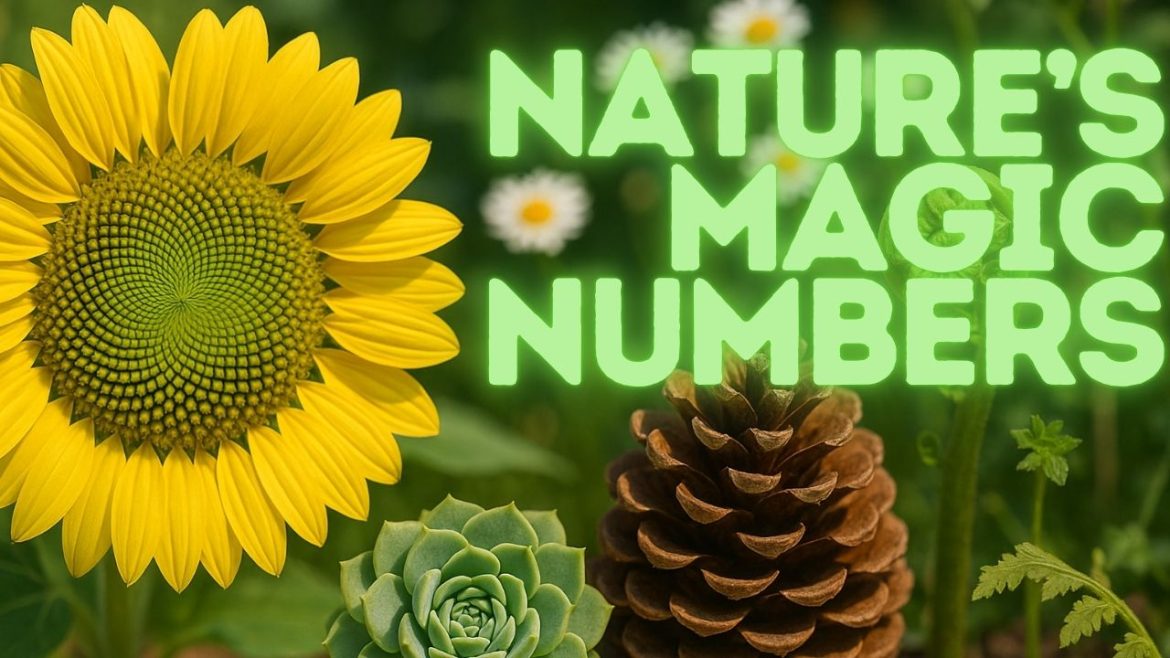
The sunflower is a showstopper in the Fibonacci world. If you trace the spirals of its seeds clockwise and counterclockwise, you’ll often find pairs of Fibonacci numbers—34 and 55, or 55 and 89. This spiral pattern isn’t just beautiful; it’s efficient. It allows the flower to pack the maximum number of seeds into its head with no wasted space.
You’ll see the same design in pinecones, pineapples, and artichokes. Their spirals follow this exact principle—showing that Fibonacci isn’t limited to one species or environment. It’s everywhere.
Leaves and the Spiral of Growth
Even leaves follow the pattern. If all leaves sprouted from the same spot, they’d block each other’s sunlight. Instead, plants space their leaves around the stem in spirals—fractions like 1/2, 1/3, 2/5, 3/8—all derived from Fibonacci numbers. This natural spacing system ensures every leaf gets its fair share of light.
Ferns, with their iconic curling fronds, are another stunning example. Their growth spiral mimics the same golden pattern found in so many other plants.
The Golden Ratio and Human Aesthetics
Underlying the Fibonacci sequence is the golden ratio—an irrational number that pops up in nature, art, and architecture. Although it’s not strictly “proven” to drive human aesthetic preferences, there’s little doubt it influences how we perceive beauty. From sunflower seeds to classical paintings, this ratio shapes how things grow—and how we respond to them.
We don’t need math degrees to feel its pull. Our eyes recognize balance, structure, and harmony when we see it. That’s why Fibonacci patterns also show up in human creations: from paintings and architecture to logos and design.
Applying Nature’s Wisdom to Daily Life
There’s something deeply grounding about realizing that even chaos has structure. The Fibonacci sequence reminds us that beauty often follows a hidden order. In a world that can feel unpredictable, finding these patterns can be calming and even inspiring.
Try walking outside with fresh eyes. Look at a succulent, an artichoke, or even a simple dandelion. Count the petals. Trace the spirals. Recognize the order behind what once seemed random.
Beyond observation, the lesson is to respect the quiet systems at work around us. Efficiency, growth, and beauty don’t have to be forced—they can emerge naturally through simple, repeated rules.
Conclusion: See the Pattern, Feel the Wonder
The Fibonacci sequence is more than just numbers—it’s nature’s silent rhythm. Whether you’re examining the swirl of a pinecone or the structure of a sunflower, you’re witnessing a deep, recurring wisdom. It’s a quiet invitation to be more aware, more curious, and more connected to the natural world.
So step outside. Look closely. The spiral of a leaf or the arrangement of petals might just shift how you see everything around you. Once you spot the pattern, you’ll never unsee it—and that’s a beautiful thing.